
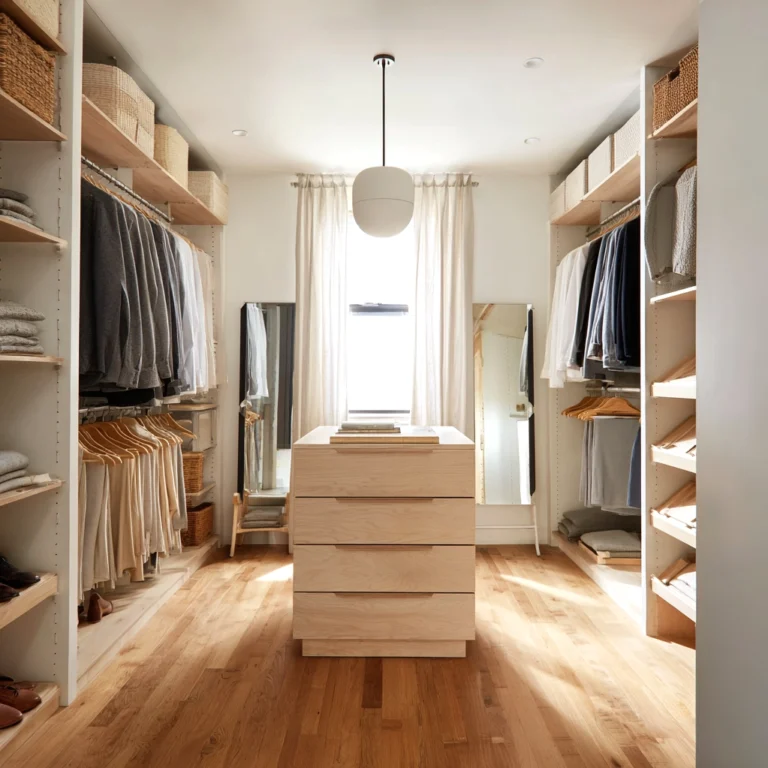
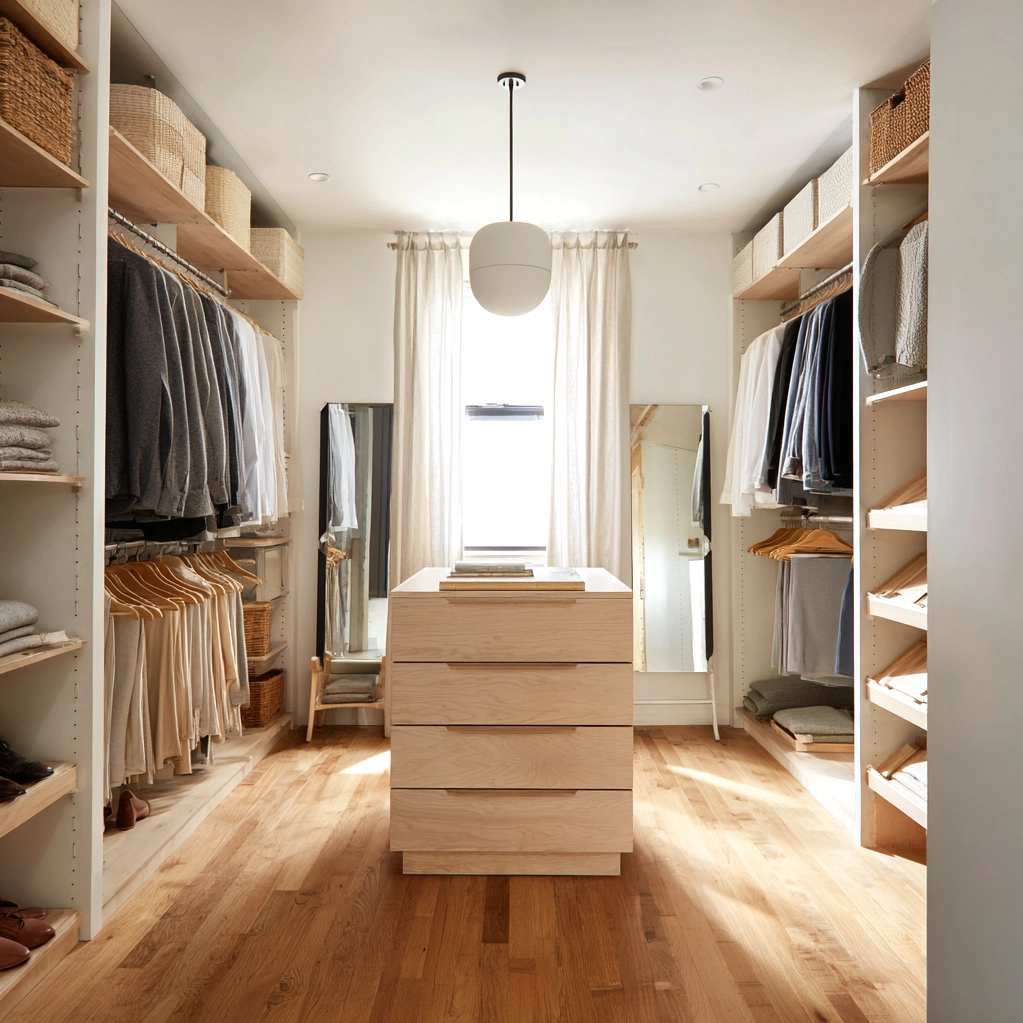
A walk-in closet is more than just storage—it’s a personal sanctuary that transforms how you start and end your day. When designed with precision, it can boost your efficiency, reduce stress, and elevate your home’s value. The key to achieving this dream lies in mastering walk in closet layout dimensions. These measurements aren’t just numbers; they’re the blueprint for functionality, accessibility, and style. Ignoring them can lead to cramped spaces, wasted potential, and daily frustrations. Whether you’re planning a new build or renovating an existing area, understanding the right dimensions ensures every inch works for you. From clearance space to shelving heights, each detail contributes to a seamless experience. In this guide, we’ll break down why walk in closet layout dimensions matter and how to get them right. By focusing on these fundamentals, you’ll create a space that’s not only beautiful but also perfectly tailored to your needs. Let’s dive into the essentials that make all the difference.
Essential Walk In Closet Layout Dimensions for Basic Functionality
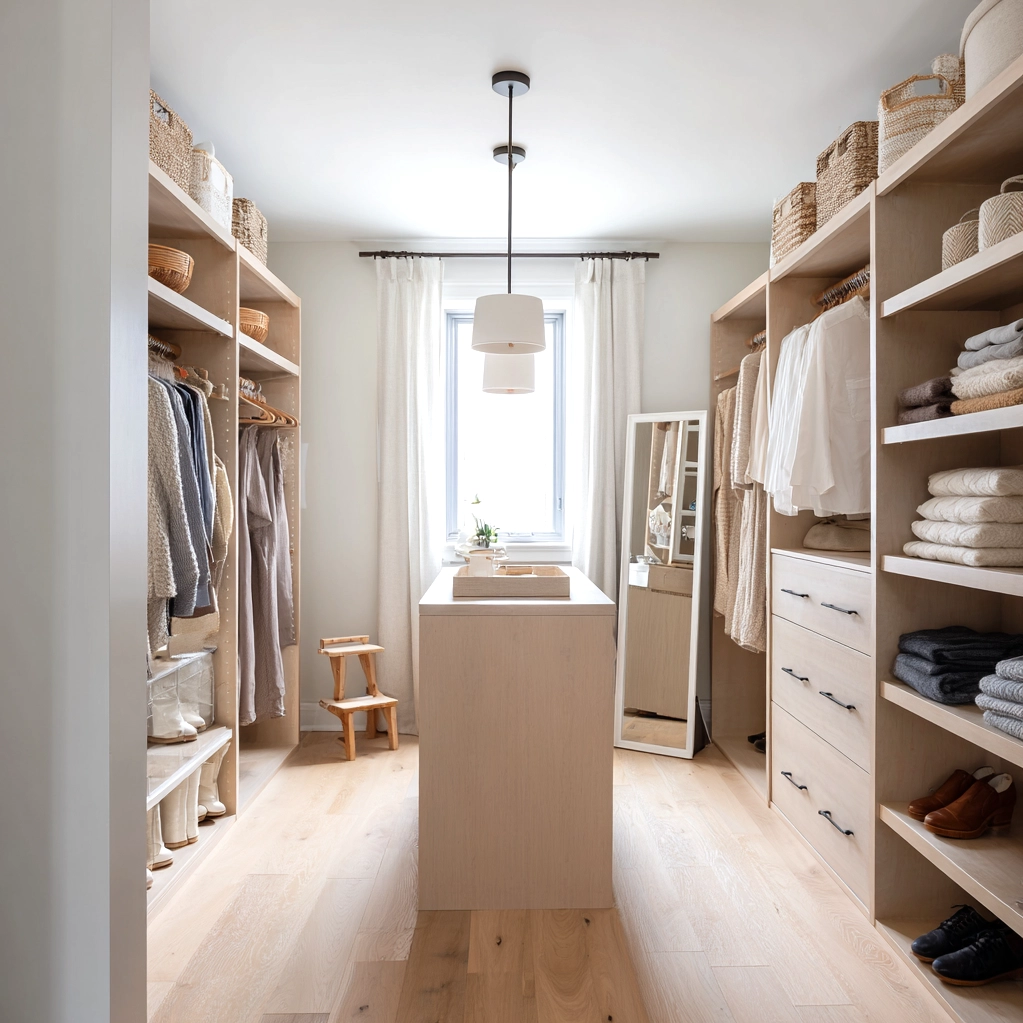
Before adding any custom features, it's crucial to establish the foundational walk in closet layout dimensions that ensure basic functionality. Start with the overall size: a minimum of 4 feet by 4 feet is needed for a small walk-in, but 5 feet by 5 feet or larger is ideal for comfortable movement. The aisle width should be at least 24 inches for single-sided storage and 36 inches for double-sided layouts, allowing easy access without feeling cramped. For hanging rods, standard heights vary: 40 to 42 inches from the floor for shirts and jackets, and 60 to 72 inches for dresses and long garments. Shelving depths typically range from 12 to 16 inches, with heights spaced 10 to 12 inches apart for folded items. Don't forget about clearance—leave 12 to 18 inches of space above shelves for bulky items and ensure lighting fixtures are placed to avoid shadows. These walk in closet layout dimensions create a functional base that adapts to any style. Measure your space carefully, considering door swings and existing structures. By prioritizing these basics, you'll avoid common pitfalls like overcrowding or inaccessible storage.
Optimizing Walk In Closet Layout Dimensions for Custom Features
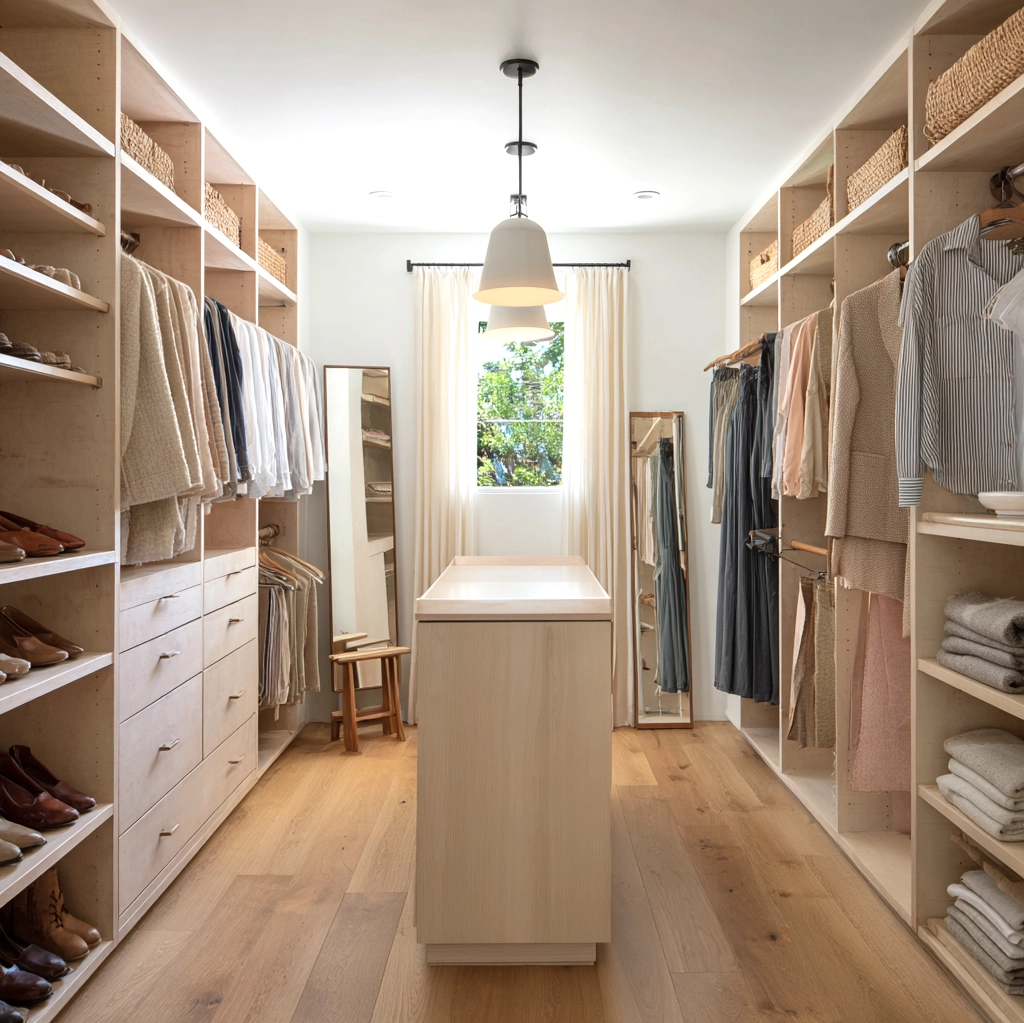
Once you've nailed the basics, you can enhance your walk in closet layout dimensions to accommodate custom features that reflect your lifestyle. For shoe storage, allocate 12 to 14 inches of depth per shelf, with heights of 6 to 8 inches for standard shoes and 10 to 12 inches for boots. If including an island, aim for 3 to 4 feet of clearance on all sides—this ensures easy navigation and access to drawers. For accessory displays, such as jewelry trays or tie racks, integrate shallow shelves at eye level, around 48 to 60 inches high, with depths of 4 to 6 inches. Consider specialized zones: a vanity area might need 30 inches of counter depth and 18 inches of knee space, while a seating nook requires at least 24 inches by 24 inches. When planning walk in closet layout dimensions for built-ins, account for trim and hardware by adding an extra inch or two. Use adjustable components to future-proof your design, allowing shelves and rods to shift as needs change. These tailored dimensions turn a standard closet into a personalized haven, maximizing every corner without sacrificing flow.
Common Mistakes in Walk In Closet Layout Dimensions and How to Avoid Them
Even with careful planning, errors in walk in closet layout dimensions can undermine your closet's potential. One frequent mistake is underestimating aisle width—crowded pathways make it hard to reach items and can feel claustrophobic. Always maintain at least 36 inches for double-sided layouts to ensure comfort. Another issue is improper rod heights; placing them too low or high strains users and wastes vertical space. Follow the standard ranges: 40-42 inches for shorter hangs and 60-72 inches for longer ones. Overlooking clearance above shelves is also common, leading to difficulty storing bulkier items like luggage or hats. Leave 12-18 inches of open space at the top. Additionally, forgetting to account for door swings or light fixtures can create dead zones or shadows—map these out early in your design. When measuring walk in closet layout dimensions, use a tape measure and sketch a floor plan to visualize spacing. Test movements by marking areas with tape on the floor. By avoiding these pitfalls, you'll create a layout that's both practical and pleasant to use every day.
Adapting Walk In Closet Layout Dimensions for Different Room Sizes
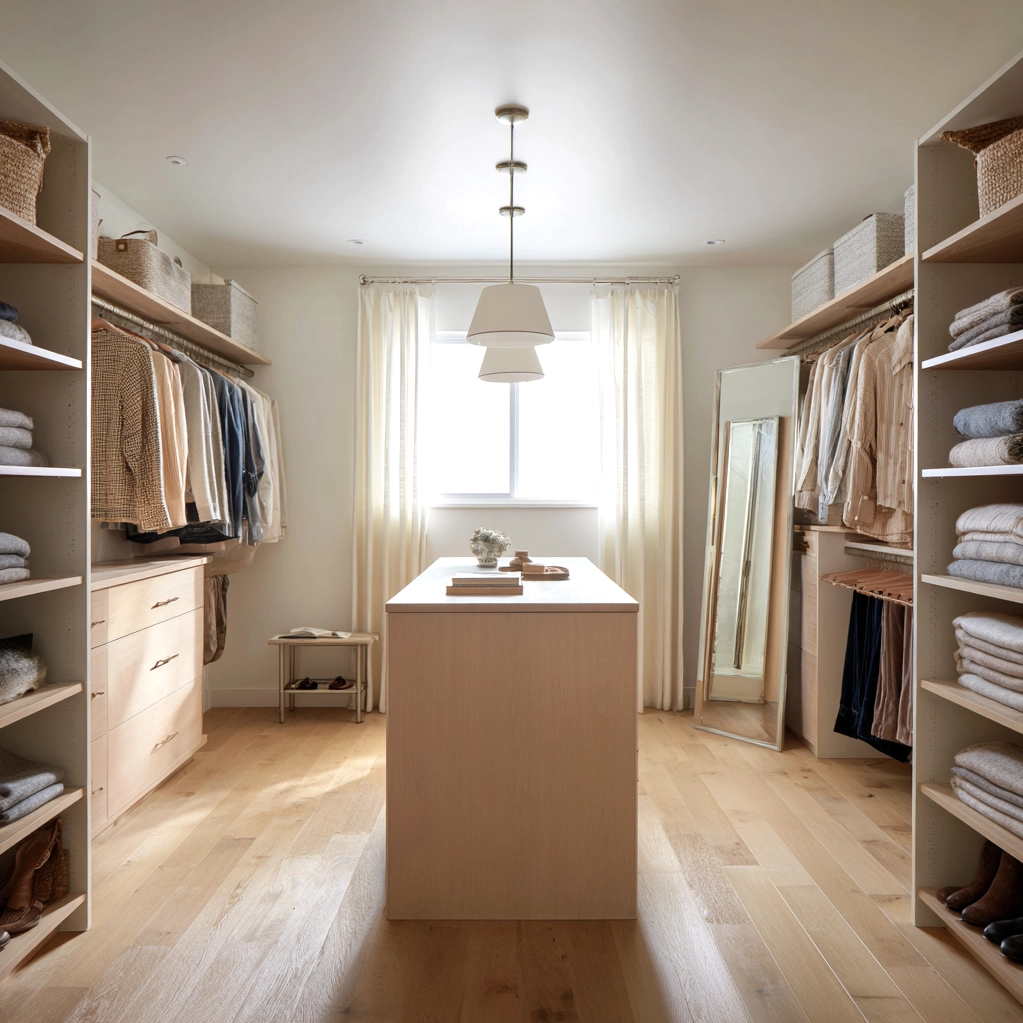
Walk in closet layout dimensions aren't one-size-fits-all; they must adapt to your available space, whether it's compact or expansive. For small rooms (under 25 square feet), prioritize vertical storage with floor-to-ceiling shelves and double-hung rods to maximize capacity. Keep aisles at the minimum 24 inches and use sliding doors to save space. In medium-sized closets (25 to 50 square feet), you can incorporate features like a central aisle of 36 inches and dedicated zones for different clothing types. Consider an L-shaped or U-shaped layout to enhance accessibility. For large walk-ins (over 50 square feet), the possibilities expand—include an island with 3-4 feet of clearance, seating areas, and specialized sections like a dressing zone. Regardless of size, maintain consistent walk in closet layout dimensions for key elements: rod heights, shelving depths, and clearances. Use modular systems to adjust as needs evolve, and always leave breathing room to avoid a cramped feel. By tailoring dimensions to your room's proportions, you'll achieve a balanced, efficient design that feels custom-built for you.
Conclusion
Mastering walk in closet layout dimensions is the cornerstone of creating a functional, stylish, and personalized storage space. Throughout this guide, we've explored the essential measurements, from basic clearances to custom features, and highlighted common mistakes to avoid. By focusing on precise dimensions, you ensure every element—from hanging rods to aisle widths—works harmoniously to enhance daily routines. Remember, these dimensions aren't just technical details; they translate into tangible benefits like easier organization, reduced clutter, and a more enjoyable dressing experience. As you plan your closet, start with accurate measurements and a clear vision of your needs. Consider future changes, such as growing collections or lifestyle shifts, and opt for adjustable components where possible. Looking ahead, trends like smart storage and sustainable materials continue to evolve, but the fundamentals of walk in closet layout dimensions remain timeless. Apply these insights to transform your space into a haven of order and style. With careful planning, your walk-in closet will become a highlight of your home, reflecting both practicality and personal flair.
Frequently Asked Questions
Q: What are the minimum walk in closet layout dimensions for a functional space?
For a basic functional walk-in closet, aim for at least 4 feet by 4 feet in floor area. This allows for a small aisle and single-sided storage. However, 5 feet by 5 feet or larger is recommended for better movement. Key dimensions include: aisle width of 24 inches minimum, hanging rod heights of 40-42 inches for shirts and 60-72 inches for dresses, and shelving depths of 12-16 inches. These minimums ensure accessibility without feeling cramped, but adjust based on your specific needs and room size.
Q: How do I measure walk in closet layout dimensions accurately?
To measure accurately, use a tape measure and record all dimensions in inches or centimeters. Start with the overall room: length, width, and height. Note the locations of doors, windows, and electrical outlets, as these affect layout options. For specific elements, measure where you plan to install rods, shelves, and islands, ensuring you account for clearances (e.g., 36-inch aisles for double-sided layouts). Create a floor plan sketch to visualize spacing, and double-check measurements to avoid errors. It's helpful to mark areas with tape on the floor to test movement before finalizing.
Q: Can I adjust walk in closet layout dimensions for irregular-shaped rooms?
Yes, walk in closet layout dimensions can be adapted for irregular-shaped rooms like L-shaped or angled spaces. Focus on maximizing usable areas: use corner shelves or rotating rods for tight corners, and ensure aisles remain at least 24 inches wide for access. In sloped ceilings, place lower storage under shorter areas and reserve taller sections for hanging rods. Custom-built solutions often work best here, allowing you to tailor dimensions to the room's unique contours while maintaining functionality. Always prioritize clear pathways and accessible storage, even in unconventional layouts.