
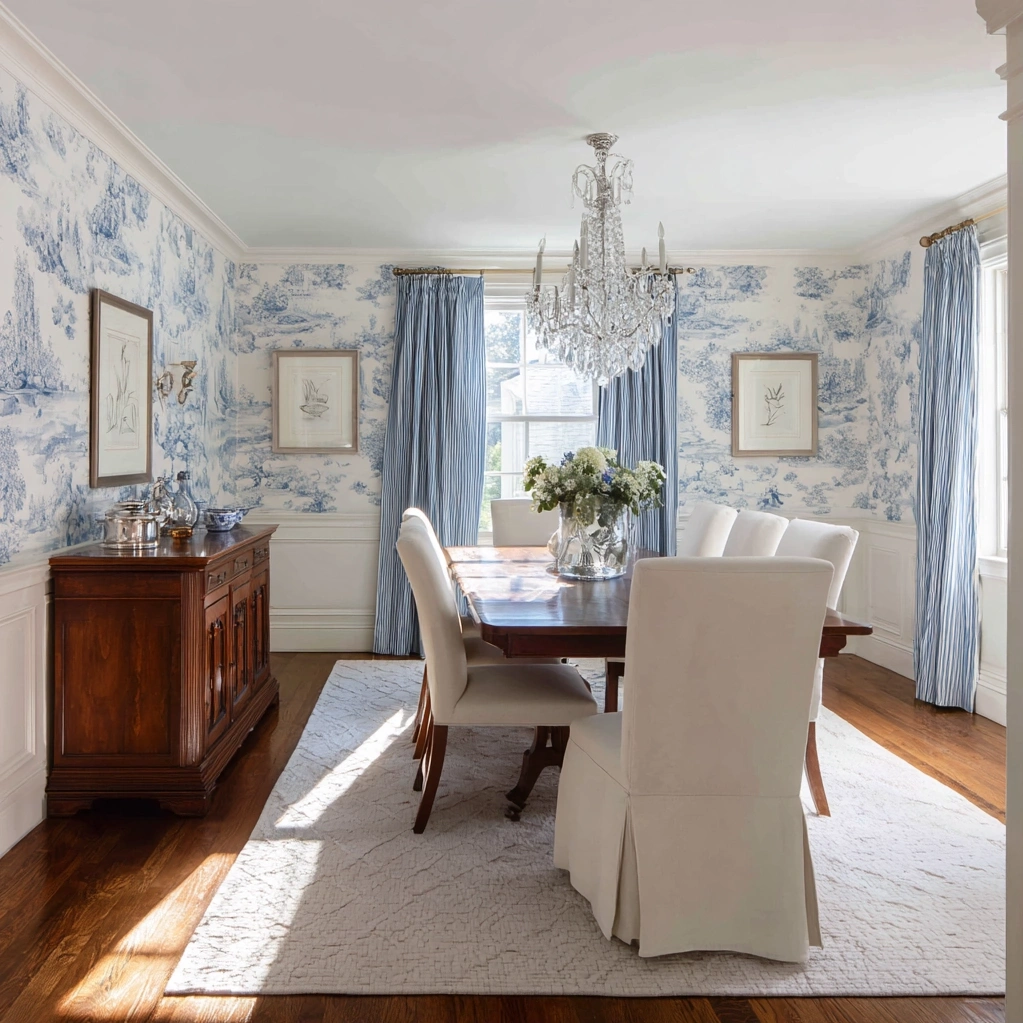
French toile wallpaper, with its intricate pastoral scenes and delicate patterns, has graced the walls of elegant homes for centuries. This classic design element brings more than just visual appeal—it tells stories, evokes nostalgia, and creates atmospheres of refined sophistication. Historically used in French chateaus and country estates, toile (pronounced ‘twahl’) patterns have evolved while maintaining their timeless charm. Today, they offer homeowners a unique opportunity to infuse spaces with European elegance and artistic detail. The importance of incorporating French toile wallpaper into your decor lies in its versatility and enduring style. Unlike fleeting trends that come and go, toile patterns represent a design tradition that has stood the test of time. They work beautifully in traditional settings while adding character to contemporary spaces. Whether you’re creating a formal dining room, a cozy bedroom, or an inviting living area, French toile wallpaper provides depth and personality that few other wall treatments can match. The handcrafted quality of authentic toile designs adds an artisanal touch to any room, transforming ordinary walls into conversation pieces. As we embrace the return of maximalism and personalized interiors, French toile wallpaper offers the perfect balance of pattern and restraint. It allows you to make a bold statement without overwhelming a space. The monochromatic color schemes typical of traditional toile patterns create visual interest while maintaining sophistication. This makes French toile wallpaper particularly valuable in today’s design landscape, where we seek both character and comfort in our living spaces. Understanding how to incorporate this classic element can elevate your home’s aesthetic and create lasting impressions on residents and guests alike.
French Toile Wallpaper History and Design Evolution
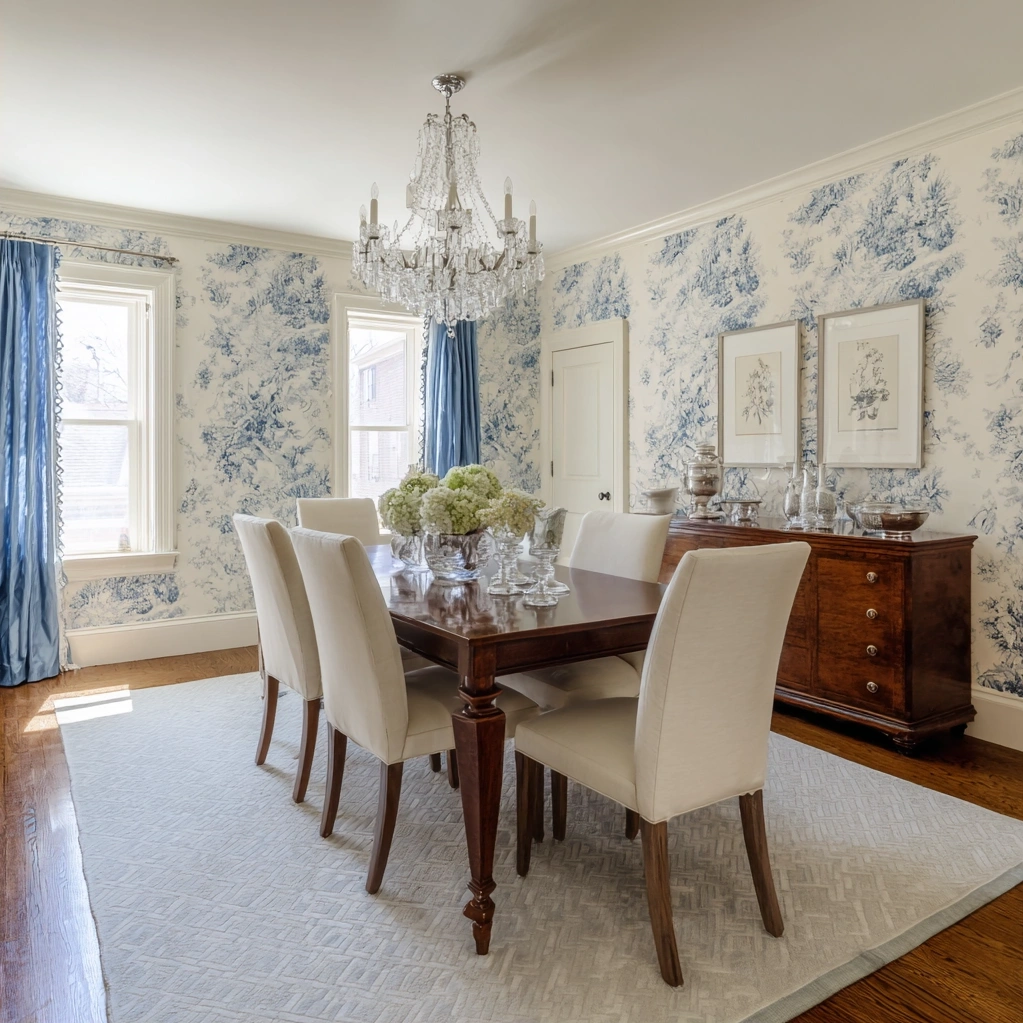
French toile wallpaper traces its origins to 18th-century France, where it began as printed cotton fabric depicting pastoral scenes and romantic narratives. The name 'toile' comes from the French word for cloth, reflecting its textile heritage. Early designs typically featured monochromatic scenes—often blue on white or red on white—showing idyllic countryside life, classical mythology, or historical events. These detailed illustrations were more than decoration; they served as storytelling devices that reflected cultural values and artistic sensibilities of the time. The evolution of French toile wallpaper from fabric to wall covering marked a significant development in interior design. Manufacturers in Jouy-en-Josas, near Paris, perfected the printing techniques that made toile patterns accessible to wealthy homeowners. The distinctive copperplate printing method created fine lines and intricate details that became hallmarks of quality toile designs. Over centuries, these patterns have adapted to changing tastes while preserving their essential character. Contemporary French toile wallpaper maintains traditional elements while embracing modern color palettes and production methods. Today's designs might feature updated color schemes—think charcoal gray on cream or soft green on ivory—while keeping the narrative illustrations that define the style. Some modern interpretations even incorporate subtle metallic accents or textured finishes. This evolution demonstrates how French toile wallpaper remains relevant across design eras, bridging historical craftsmanship with contemporary aesthetics. The enduring appeal lies in its ability to tell visual stories while providing sophisticated background patterns. Unlike generic wallpapers that merely fill space, French toile designs engage viewers with their detailed scenes and artistic merit. This historical depth makes them particularly valuable in creating layered, meaningful interiors that reflect both tradition and personal style.
Choosing the Perfect French Toile Wallpaper for Your Space
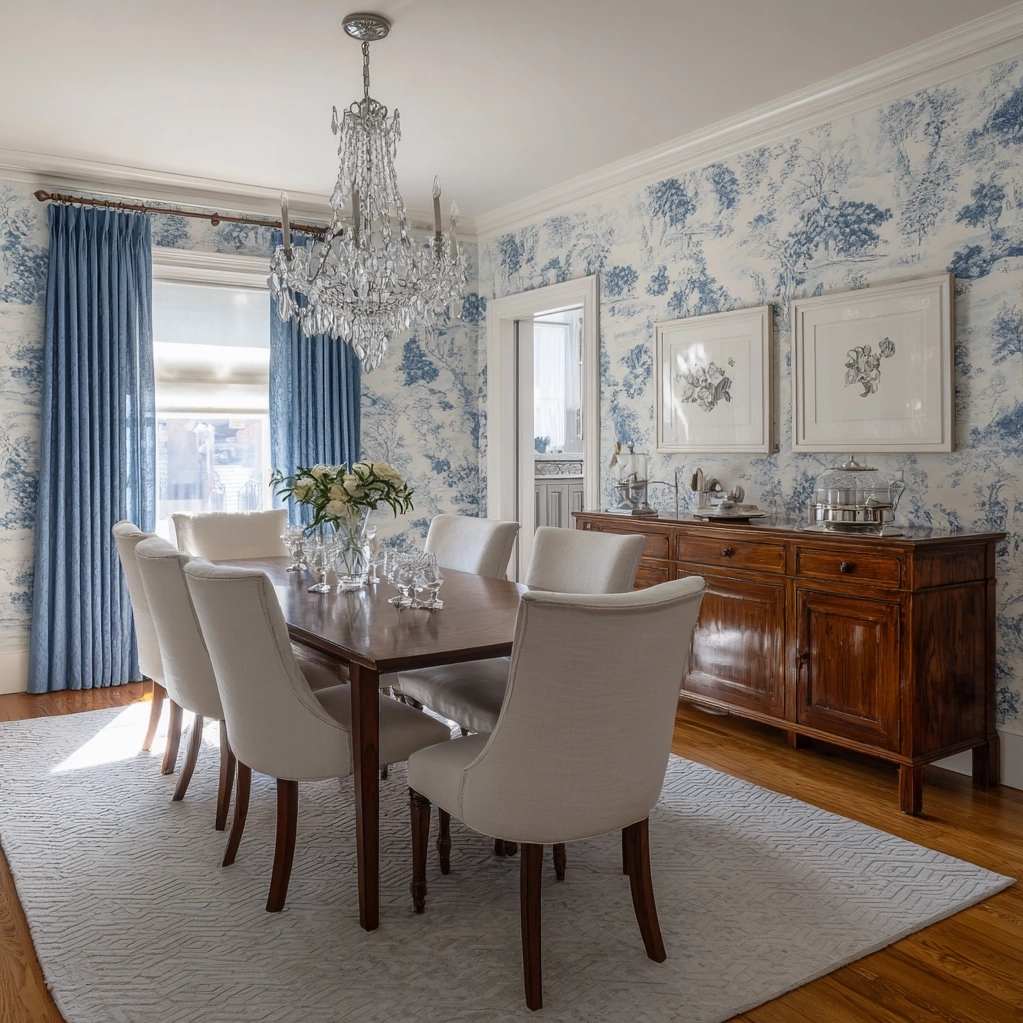
Selecting the right French toile wallpaper involves considering several factors to ensure it complements your space beautifully. Start by assessing the room's size and natural light. Traditional monochromatic toile patterns work well in smaller rooms, as they create visual interest without overwhelming the space. For larger areas, you might consider bolder color combinations or scaled-up patterns. The classic blue-on-white French toile wallpaper remains popular for its timeless elegance, but don't overlook other color options. Soft gray, sage green, or warm taupe backgrounds can provide contemporary updates while maintaining traditional charm. Consider the room's function when choosing your French toile wallpaper. Dining rooms often benefit from formal, detailed patterns that create sophisticated atmospheres for entertaining. Bedrooms might suit softer, more romantic toile designs with floral elements or gentle pastoral scenes. For living areas, consider how the pattern will interact with furniture and artwork—look for designs with balanced compositions that won't compete with other decorative elements. Scale is another crucial consideration. Traditional French toile wallpaper typically features medium-scale patterns that work well in most residential settings. However, modern interpretations sometimes offer larger-scale designs for statement walls or high-ceilinged spaces. Always request samples to see how the pattern repeats and how colors appear in your specific lighting conditions. Pay attention to the quality of printing and paper weight, as these affect both appearance and durability. Authentic French toile wallpaper often features fine line work and crisp details that distinguish it from mass-produced alternatives. Finally, consider how the pattern's narrative elements align with your personal style. Some designs feature specific themes—botanical scenes, historical events, or literary references—that can add personal meaning to your space. By carefully evaluating these factors, you can choose French toile wallpaper that enhances your room's architecture, supports its function, and reflects your aesthetic preferences.
Styling Tips for French Toile Wallpaper Interiors
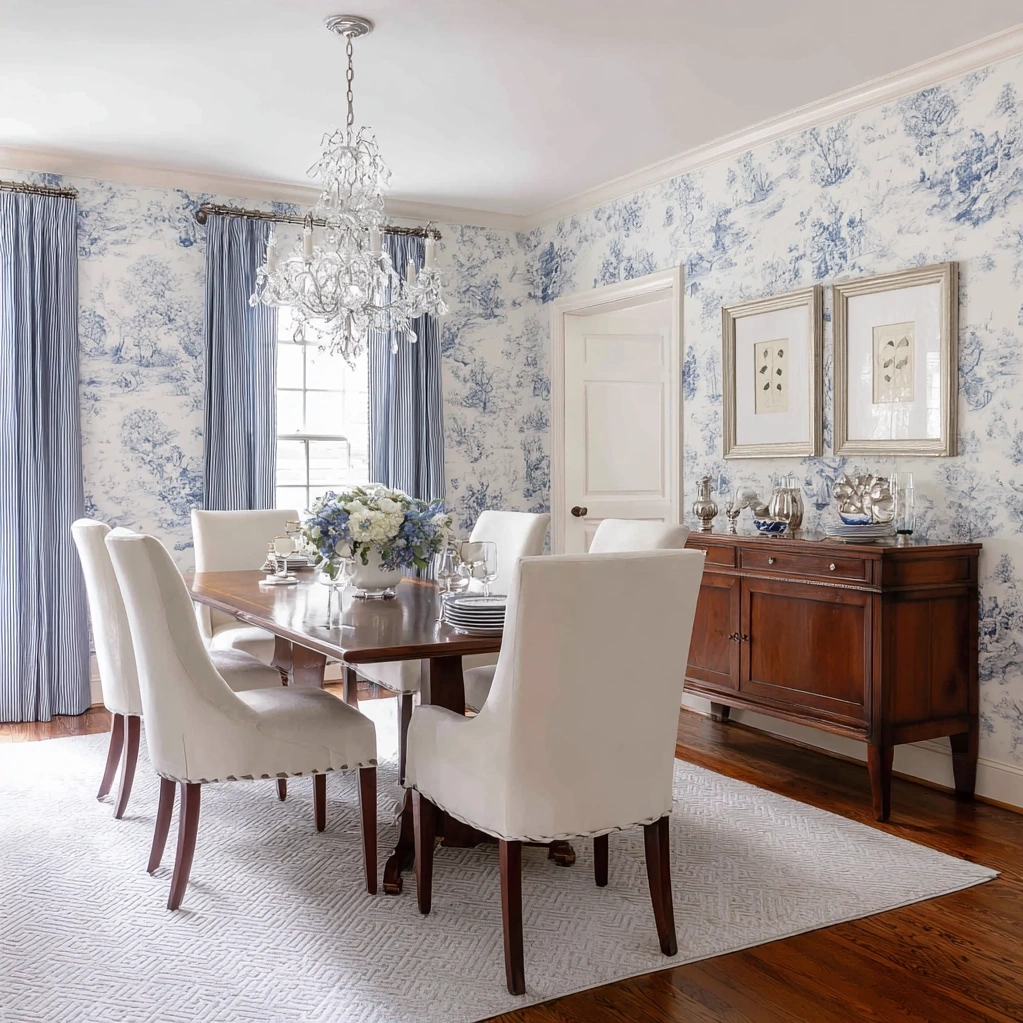
Successfully incorporating French toile wallpaper into your decor requires thoughtful styling that balances pattern with other design elements. Begin by treating the wallpaper as your room's foundation rather than its focal point. Since French toile patterns are typically detailed and narrative, keep other patterns minimal. Solid-colored furniture and simple window treatments allow the wallpaper to shine without creating visual clutter. For color coordination, pull one or two hues from the wallpaper pattern for your upholstery, accessories, or trim work. If you've chosen classic blue French toile wallpaper, consider using cream or white for larger furniture pieces, then add blue accents through pillows, throws, or decorative objects. This creates cohesion without matching everything perfectly. Lighting plays a crucial role in showcasing French toile wallpaper. Ensure adequate ambient lighting to illuminate the pattern's details, but avoid harsh overhead lights that might create glare. Consider wall sconces or picture lights that enhance the wallpaper's texture and depth. For rooms with French toile wallpaper, layered lighting—combining ambient, task, and accent sources—works best to highlight the pattern's intricacies throughout the day. Furniture placement should respect the wallpaper's pattern rhythm. Avoid covering key design elements with large furniture pieces. Instead, position sofas, beds, or bookshelves to frame rather than obscure the pattern. In dining rooms with French toile wallpaper, a simple, elegant table setting allows the walls to provide the decorative interest. For bedrooms, crisp white linens create beautiful contrast against toile-patterned walls. Accessorizing requires particular care with French toile wallpaper. Choose simple, substantial pieces that complement rather than compete with the wall pattern. Mirrors in gilded frames, solid ceramic vases, or wooden bowls work well. Avoid small, busy accessories that might get lost against the detailed background. Artwork should be limited and carefully selected—perhaps one significant piece per wall—to maintain visual calm. Finally, consider architectural elements. Traditional French toile wallpaper pairs beautifully with wainscoting, crown molding, or chair rails. These elements can help break up large wall spaces and provide transition points between the patterned wallpaper and other surfaces. By following these styling principles, you can create interiors where French toile wallpaper enhances rather than dominates, resulting in sophisticated, balanced spaces.
Conclusion
French toile wallpaper represents more than just a decorative choice—it's an investment in timeless elegance and artistic storytelling for your home. Throughout this exploration, we've seen how these intricate patterns bridge historical craftsmanship with contemporary design sensibilities, offering versatility across various spaces and styles. The key to successfully incorporating French toile wallpaper lies in understanding its heritage while adapting it to modern living. By choosing appropriate patterns, colors, and scales for your specific spaces, and by styling with thoughtful consideration of lighting, furniture, and accessories, you can create interiors that feel both classic and current. Looking forward, French toile wallpaper continues to evolve while maintaining its essential character. We can expect to see more sustainable production methods, innovative digital printing techniques that preserve fine details, and expanded color options that appeal to diverse tastes. The growing appreciation for artisanal quality and narrative design suggests that French toile patterns will remain relevant as homeowners seek meaningful connections with their living spaces. As you consider incorporating French toile wallpaper into your home, remember that its true value lies in creating atmosphere and telling visual stories. Whether you choose traditional monochromatic designs or contemporary interpretations, these patterns offer depth and sophistication that few wall treatments can match. They transform ordinary rooms into curated spaces that reflect both personal style and design heritage. Ultimately, French toile wallpaper provides an opportunity to surround yourself with beauty that endures—a quality increasingly precious in our rapidly changing world. Embrace this classic element not as a trend but as a foundation for creating homes that inspire and comfort for years to come.
Frequently Asked Questions
Q: What rooms work best with French toile wallpaper?
French toile wallpaper works beautifully in various rooms when chosen appropriately. Dining rooms are classic choices, as the formal, detailed patterns create sophisticated atmospheres perfect for entertaining. Bedrooms benefit from toile's romantic, storytelling quality—especially in powder blue or soft gray colorways. Living rooms can successfully incorporate French toile wallpaper, particularly when using it on an accent wall or in spaces with traditional architectural details. Smaller spaces like powder rooms or entryways often work well with toile patterns, as the detailed designs add interest without overwhelming limited square footage. For kitchens, consider moisture-resistant versions or use French toile wallpaper in adjacent breakfast nooks rather than directly near cooking areas. The key is matching the pattern's scale and color to the room's size, function, and natural light.
Q: How do I clean and maintain French toile wallpaper?
Proper cleaning and maintenance preserve the beauty of French toile wallpaper. For routine care, use a soft brush or vacuum cleaner with a brush attachment to gently remove dust from the surface. Avoid abrasive cleaning tools that might damage the printed pattern. For spot cleaning, test any cleaning solution on an inconspicuous area first. Most modern French toile wallpaper can be cleaned with a damp sponge using mild soap and water, but always check manufacturer recommendations. Blot rather than rub stains, working from the outside toward the center to prevent spreading. Protect wallpaper from direct sunlight, which can fade colors over time—consider UV-protective window treatments in rooms with significant sun exposure. For traditional non-washable papers, professional cleaning may be necessary for stubborn stains. Proper installation by experienced professionals also contributes to longevity, ensuring seams are secure and surfaces are properly prepared.
Q: Can French toile wallpaper work in modern or minimalist interiors?
Absolutely—French toile wallpaper can complement modern and minimalist interiors when selected and styled thoughtfully. The key is choosing updated interpretations of traditional patterns. Look for French toile wallpaper with contemporary color schemes like charcoal on white, soft gray on cream, or muted earth tones. These feel fresh while maintaining the pattern's classic character. Scale matters too: opt for larger-scale patterns or simplified designs that align with minimalist aesthetics. When incorporating French toile wallpaper in modern spaces, use it strategically—perhaps on a single accent wall rather than throughout an entire room. Pair it with clean-lined furniture, neutral upholstery, and minimal accessories to maintain balance. The contrast between the detailed wallpaper and simple furnishings can create compelling visual tension. Some designers even use French toile wallpaper in unexpected places like ceilings or inside closets for subtle pattern play. The narrative quality of toile patterns can add warmth and personality to minimalist spaces that might otherwise feel sterile. By treating the wallpaper as an artful backdrop rather than the main event, you can successfully blend traditional pattern with contemporary design sensibilities.